Autonomous skidders that drag felled trees around logging sites. A database detailing each tree in the forest. A screen that shows loggers which trees to cut and which to leave standing to maximize financial returns decades down the line.
Weyerhaeuser WY 0.02%increase; green up pointing triangle, the country’s top logger and one of its oldest companies, is betting artificial intelligence can deliver these and other big changes to American forestry, which has come a long way from oxen and axes.
Many applications envisioned by Weyerhaeuser executives are unique to a company that manages timberlands in the U.S. and Canada that together cover an area roughly the size of Indiana.
“We’ve been growing forests for 125 years. We probably have as much information and data about how forests grow as any organization on the planet,” Chief Executive Devin Stockfish said in an interview. “The opportunity set here is really leveraging this new transformational technology to take all of that information and data and make everything we do better.”
The housing slump has knocked Weyerhaeuser’s shares down roughly 40% from the all-time high they reached in 2022 during the pandemic lumber boom. Meanwhile, the broader market has soared to new records, largely because of excitement over AI.
2022'25-40-20020406080%WeyerhaeuserS&P 500
Although chip makers and other technology companies have led stock indexes higher, old-economy businesses including Weyerhaeuser expect AI to lift their fortunes as well.
The Seattle company outlined plans to boost annual profits by $1 billion—roughly double 2025’s—by the end of the decade independent of any increase in lumber prices. Executives are counting on efficiencies achieved with AI to deliver a big chunk of those gains.
Some AI applications that Weyerhaeuser is pursuing are similar to how other manufacturing firms are deploying the technology.
It is monitoring equipment in its fleet of mills for odd vibrations and other signs that maintenance is needed. It is matching output to customer demand and market pricing in real time. And it is optimizing the routes taken by its trucks, 5,000 of which rumble each day along company logging roads whose mileage rivals the Interstate Highway System.
Weyerhaeuser has a history of advancing technology in the woods. Frederick Weyerhaeuser, a German immigrant, brought order to Wisconsin’s pineries after the Civil War by using river booms to corral and sort the thousands of logs floated down to sawmills each spring.
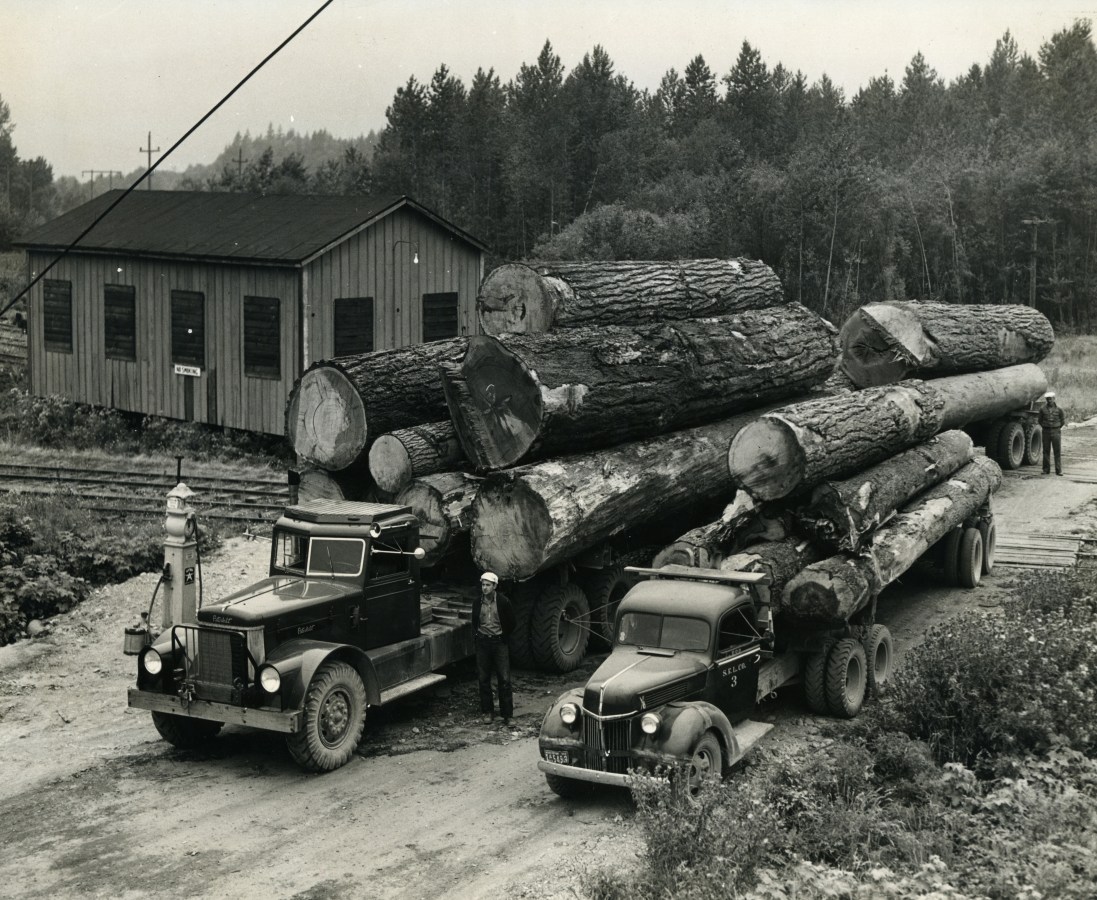
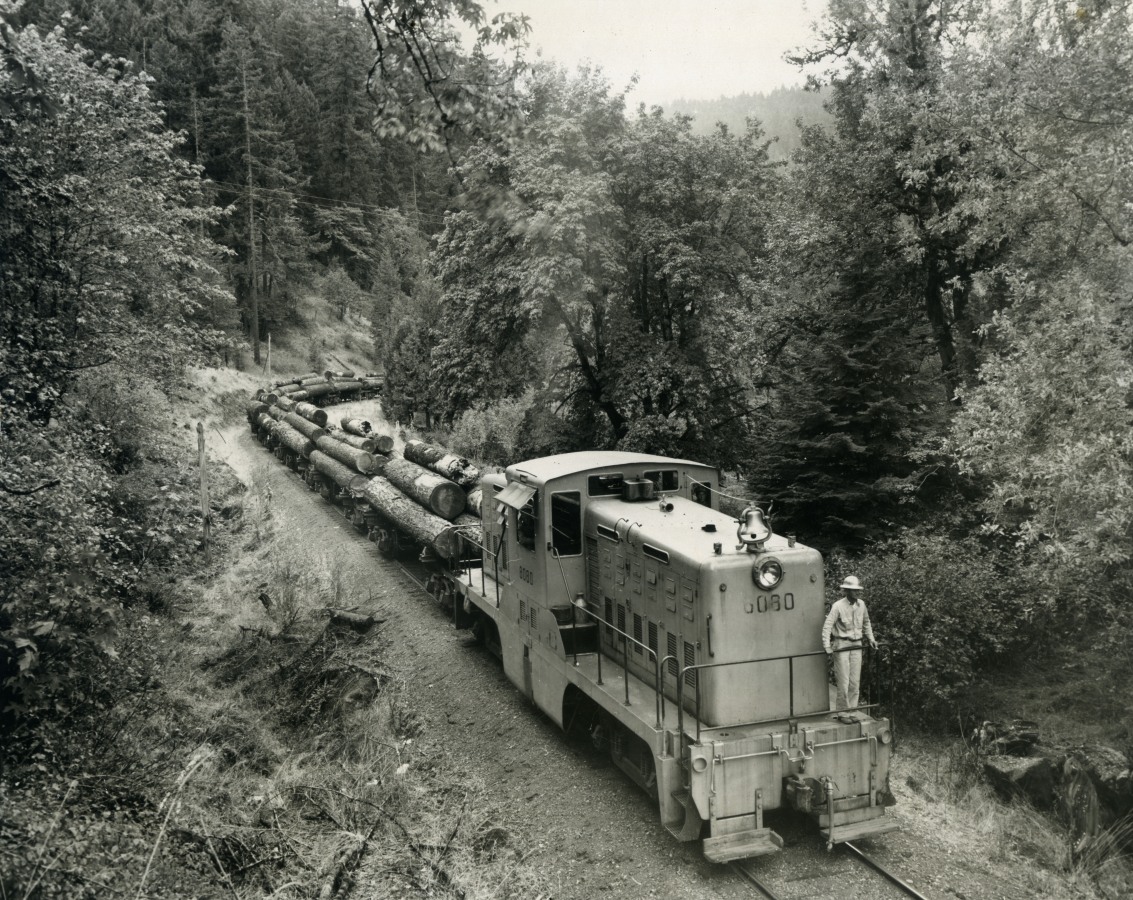
Weyerhaeuser's adoption of diesel-fueled trucks and locomotives opened new areas to logging and reduced fire risk from steam engines.Forest History Society/Weyerhaeuser Collection
His eponymous company, which the Gilded Age lumber baron founded with partners in 1900, pioneered logging techniques to harvest the Pacific Northwest’s verdant slopes. It pushed reforestation, planting the first U.S. tree farm on 200,000 acres in Washington.
More recently, Weyerhaeuser programmed computers to sift through property attributes to identify opportunities for wind and solar power installations and carbon sequestration projects.
To deploy AI, Weyerhaeuser hired John Scumniotales, a longtime tech executive who joined from Amazon.com’s Alexa voice-assistant unit.
Among the initiatives he oversees is the creation of a digital twin of Weyerhaeuser’s timberlands using satellite imagery, drone photography and lidar, a laser-based sensor technology that self-driving cars use to map their surroundings. It will let Weyerhaeuser know the size and species of each tree, and how far it is from others.
It will be useful monitoring seedlings, Stockfish said. Although Weyerhaeuser’s hardwood forests in New England and West Virginia are logged selectively and naturally regenerate, its coniferous timberlands in the South and Pacific Northwest are clear-cut and replanted.
OregonLouisianaArkansasMississippiWashingtonMaineNorth CarolinaAlabamaGeorgiaOklahomaWest VirginiaFloridaSouth CarolinaVirginiaVermontNew HampshireTexas0 million acres0.20.40.60.811.21.41.6
Weyerhaeuser trained an AI model to pore over drone footage and calculate seedling survival rates, which are typically obtained by sending foresters to count twiggy young trees in rugged or sweltering terrain.
“You don’t have to have someone out walking on steep slopes,” Stockfish said. “But you get better data, quicker data, cheaper data.”
For a company that plants more than a 100 million seedlings a year, or 190 a minute, the savings add up.
Weyerhaeuser is also studying semiautonomous logging equipment. At a meeting with investors in New York last year, executives showed video of a driverless skidder, dragging freshly downed timber around a Southern logging site.
The pilot project showed that an equipment operator in his home office 400 miles away could maneuver the skidder, which was equipped with AI-assisted navigation and terrain mapping technology from the firm Kodama Systems.
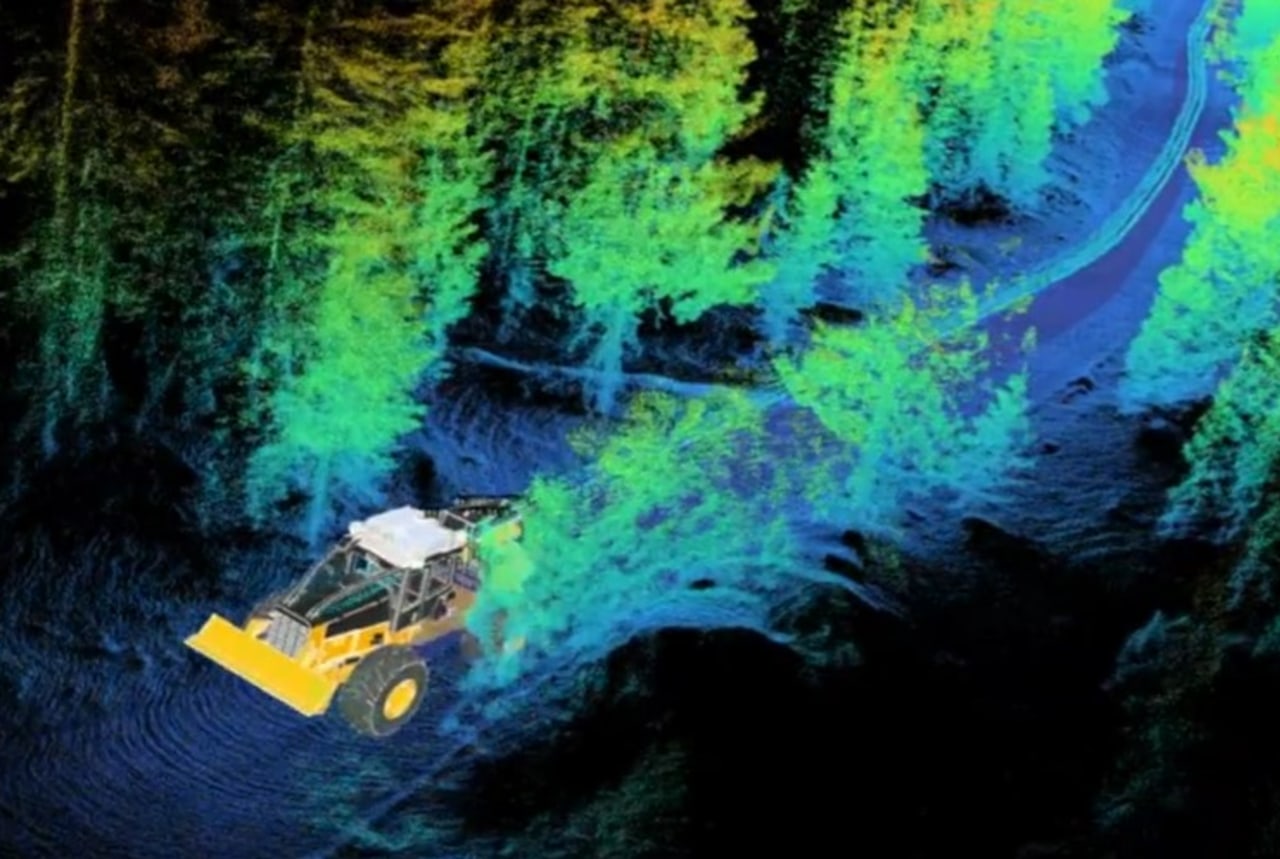
A skidder is maneuvered remotely by an equipment operator with the help of AI-assisted navigation and terrain mapping. Weyerhaeuser
“It improves efficiency and could result in one operator operating multiple skidders,” said Travis Keatley, senior vice president of timberlands. “This puts us on a path to full autonomy.”
It isn’t just skidders heading toward autonomy. The whole logging process—from feller-bunchers that cut and stack tree trunks to delimbers that shear off the branches—could be operated by one person on-site with remote help from others.
Weyerhaeuser is also working with Swedish firm Nordic Forestry Automation on an in-cabin AI assistant for harvesters, Scumniotales said. It shows a digital representation of the forest, highlighting which trees to cut and which to leave during thinnings.
The decisions are made in the forest by an algorithm Weyerhaeuser built to ensure the best specimens are left with room to grow big enough to become the most valuable products, such as lumber and utility poles.